


ADHD and Menopause: Understanding the Changes and Finding Support

Menopause can be a challenging transition, bringing changes to our physical, emotional and mental wellbeing. For women who are neurodivergent, these challenges can sometimes be amplified, as hormonal fluctuations affect the systems that help us manage everyday life.
But why are so many women in their 40s and 50s only now discovering that they may have ADHD?
For some, the signs have been there since childhood — difficulties with timekeeping, organisation, concentration or emotional regulation. Yet over the years, they've developed ways of adapting and managing these challenges, often without recognising them as ADHD traits.
Then, during perimenopause and menopause, something begins to change. Strategies that have worked for decades may no longer feel quite so effective, and the effort of keeping everything together can become increasingly exhausting.
One possible explanation lies in the relationship between oestrogen, dopamine and the brain.
The connection between oestrogen and ADHD
Oestrogen influences brain function, including attention, memory, motivation and emotional regulation. It also interacts with dopamine, a neurotransmitter involved in executive functioning — the mental processes that help us plan, organise, manage time and regulate our attention.
During perimenopause, oestrogen levels fluctuate considerably before eventually declining. Researchers are exploring how these changes may affect ADHD symptoms, potentially making longstanding difficulties more noticeable.
Menopause can also affect working memory, concentration and mental clarity, placing additional demands on the very skills we rely upon to manage everyday life.
When coping takes more energy
Many women with ADHD have spent years developing strategies to navigate everyday demands. Someone who struggles with timekeeping may carefully plan their day, while someone who finds organisation difficult might rely on lists and routines.
Some also learn to conceal their difficulties from others, a process known as masking.
These strategies can take considerable mental and emotional energy. When hormonal changes, disrupted sleep and cognitive difficulties place additional demands on us, maintaining them can become harder.
What once felt manageable may begin to feel exhausting, sometimes bringing frustration or a loss of confidence in abilities we've always relied upon.
It doesn't necessarily mean that ADHD itself has become more severe. Rather, the resources available to manage longstanding difficulties may have changed.
Recognising neurodivergence in midlife
ADHD has historically been under-recognised in girls and women, particularly when their experiences didn't fit the familiar picture of hyperactivity.
Some may have been described as forgetful, disorganised, overly sensitive or always running late. Others appeared to manage well, despite the effort involved behind the scenes.
When menopause makes these patterns more noticeable, it can bring a new understanding of experiences that may have been present throughout life.
For some women, this leads to seeking an ADHD assessment. For others, it opens up a different way of understanding themselves, perhaps bringing relief, sadness or a growing sense of acceptance.
Of course, menopause itself can affect memory, concentration and emotional wellbeing, even without ADHD. But whatever the explanation, there can be value in approaching these experiences with greater understanding and less judgement.
Allowing ourselves to slow down
We live in a world that often values productivity, organisation and keeping pace with others, with little room for the different ways we think, feel and experience life.
For someone who has spent years working hard to meet these expectations, slowing down may not come naturally.
There can be a tendency to look for another solution, another strategy, another way to manage things better.
Yet perhaps, rather than asking more of ourselves, we might benefit from allowing a little less. Less pressure to keep everything together. More space to notice how we're feeling.
When our minds are busy, we may become less aware of what's happening in our bodies — the tension we're holding, the way we're breathing or how tired we really are.
Gently bringing our awareness back to the body can offer a different experience. Not an attempt to stop our thoughts or change how we feel, but simply an opportunity to notice what is present.
Shiatsu — a space to be as you are
Much of everyday life asks us to adapt, to keep pace and fit into ways of living that don't necessarily suit everyone. For neurodivergent people, this can mean spending considerable energy navigating a world that isn't always designed with their needs in mind.
The effort of continually adapting or trying to fit in can create tension physically, emotionally and mentally. We may hold tightness in our bodies, feel overwhelmed or struggle to settle a busy mind, sometimes without even realising it.
Shiatsu takes a holistic approach, recognising that our physical, emotional and mental wellbeing are closely connected.
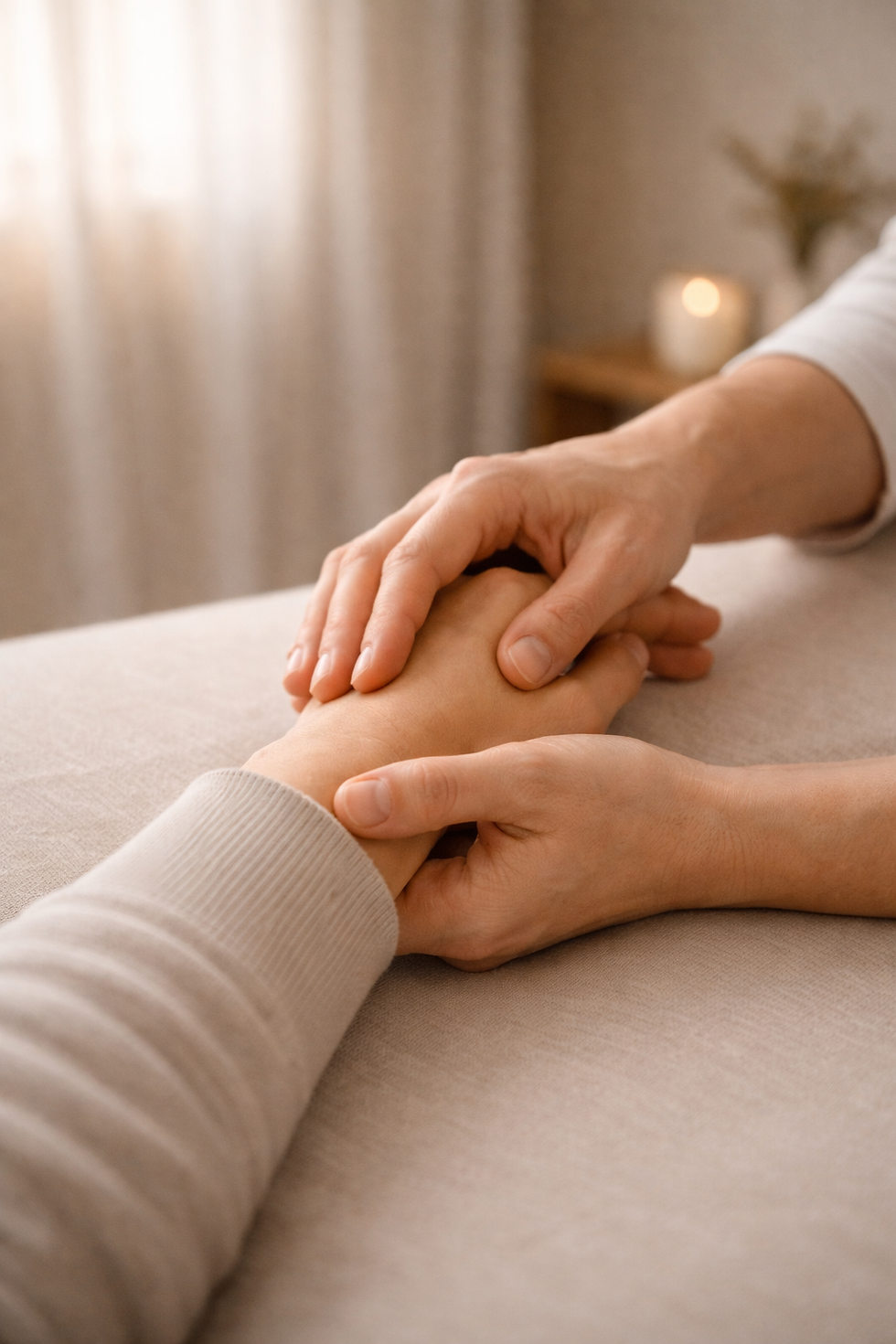
Through gentle, attentive touch, I work with each person as an individual, offering space to soften, settle and release some of the tension they may be carrying.
There is no need to organise, perform or even try to relax. Simply a space to be as we are.
For some, this brings a sense of calm, relaxation and grounding. There can also be something deeply reassuring about feeling more comfortable in our own skin, particularly when so much of life has involved trying to fit in.
Often, that sense of ease can stay with us beyond the treatment, bringing a little more confidence in ourselves and how we move through the world.
Shiatsu isn't about changing who we are. It's about creating the space to feel more at home in ourselves.
Shiatsu is a complementary therapy and does not replace medical assessment or treatment. If you're concerned about ADHD symptoms or changes during menopause, speak with your GP.


Comments