


Shiatsu, Mindfulness, and Easing around our Preferences
- Sarah Griffiths

- Jan 9
- 2 min read

Over the New Year, I spent time on a silent meditation retreat, stepping away from everyday routines and spending extended periods in mindfulness practice. With less external input and more time for sitting, walking, and rest, it became easier to notice how the body and mind respond to experience.
One theme that stood out was preference — the small, often unconscious ways we lean toward what feels pleasant and resist what feels uncomfortable. In silence, these tendencies were easier to observe, not as a problem to solve, but as part of being human.
Preferences live in the body
On retreat, preferences showed up very clearly in the body. A tightening when something felt uncomfortable. A subtle holding of the breath. An urge to shift or distract.
When attention is brought gently to these responses, mindfulness becomes embodied. Rather than staying in the head, awareness moves into sensation, posture, and breath. Simply noticing what is happening, without trying to change it, often creates a little more space.
Softening rather than fixing
As preferences are met with interest rather than resistance, something begins to soften. This doesn’t mean discomfort disappears, but the struggle around it can ease.
This softening often brings a sense of steadiness and presence. The body feels less braced, and the mind less busy. Experience is allowed to unfold, moment by moment, without needing to be different.
How shiatsu supports this state
This way of meeting experience feels closely aligned with shiatsu. Shiatsu therapy is a form of holistic bodywork, and it also shares many qualities with mindfulness practice — listening, patience, and respect for what is present.
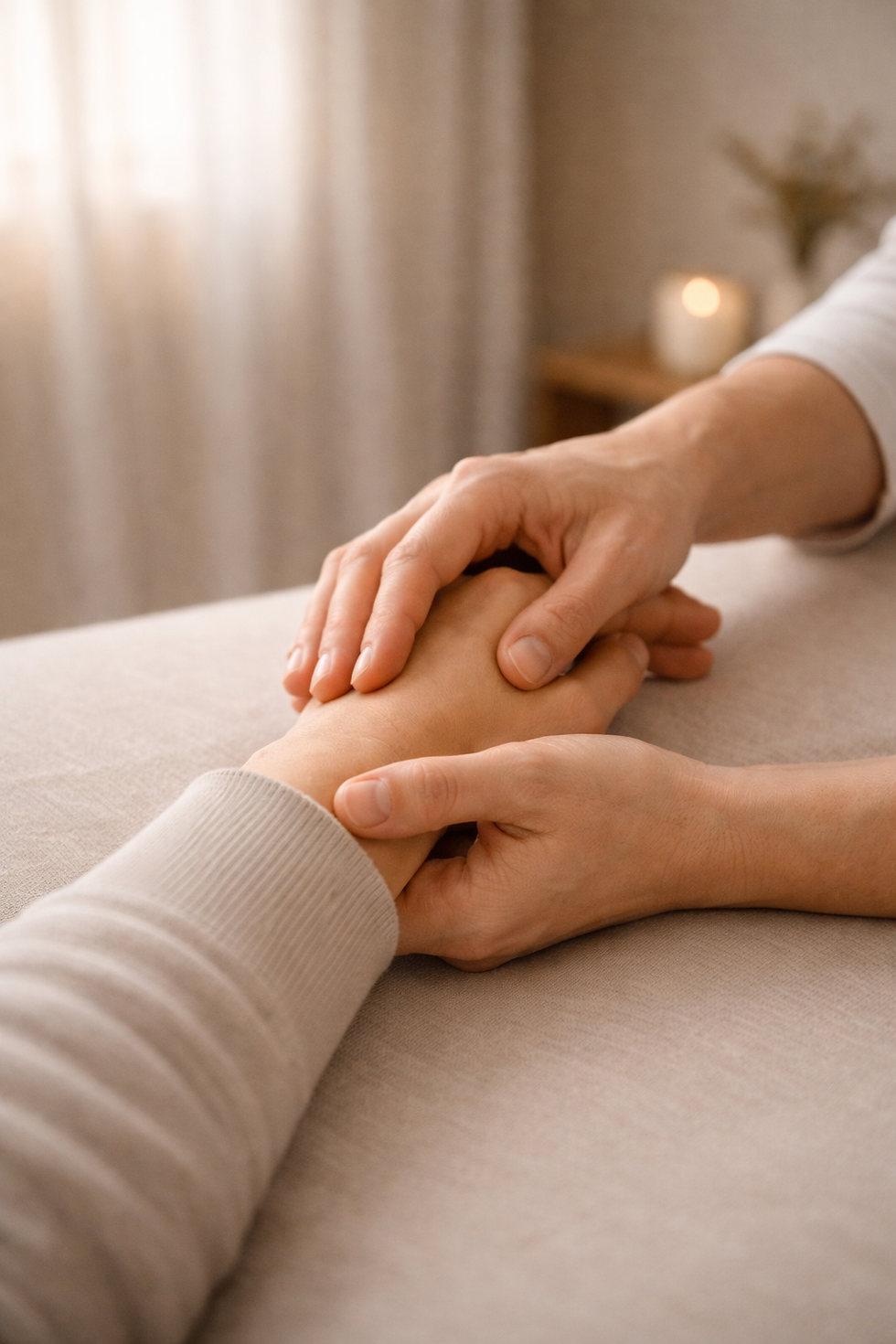
In a shiatsu session, the body is met through steady, attentive touch. There is no attempt to push or override tension. Instead, areas of holding are listened to. As the body feels supported, it often begins to release in its own time.
This can support a mindful state where awareness naturally settles into the body. Breathing deepens, thoughts slow, and there is a growing sense of ease.
Ease and the nervous system
From a nervous system perspective, this response makes sense. When the body feels safe and listened to, it can move out of habitual stress patterns.
Strong preferences are often linked to the nervous system’s attempt to stay safe. When these preferences are softened — through meditation, silence, or shiatsu therapy — the system has more flexibility. Rest becomes more available.
Bringing this into everyday life
The retreat was a reminder that mindfulness is not about achieving a particular state. It’s about how we relate to what is already here.
Shiatsu supports this same orientation by meeting the body where it is and trusting its natural capacity to respond. Whether through meditation, shiatsu, or small pauses during the day, softening preferences can help create more ease in both body and mind.

Comments